The role of eco-organizations in waste management: a complete guide
Eco-organizations now play a leading role in managing the life cycle of products and waste. They intervene on specific product categories depending on the industry. By collecting eco-contributions, they organize or handle waste for member companies.

Understanding eco-organizations
Eco-organizations are non-profit structures set up by producers as part of EPR (Extended Producer Responsibility) schemes.
As those responsible for placing products on the market, manufacturers must ensure the prevention and management of these end-of-life products. They therefore handle the entire product life cycle, as well as waste.
This is the polluter-pays principle. The cost of waste treatment is borne by the company. This is called the eco-contribution: the sum is paid by the manufacturer to the eco-organization to which it belongs.
Companies are encouraged to focus more on eco-design, product repairability and their treatment through recycling.
In France, eco-organizations are collective or individual.
Missions and objectives of eco-organizations
Eco-organizations are approved by public authorities. They collect eco-contributions from manufacturers who join them. Either they reserve them for local authorities or organizations responsible for waste management. Or they use these funds themselves to manage the collection, sorting, treatment and recovery of waste.
Legal and regulatory framework
Eco-organizations are governed by the AGEC law, or anti-waste law for a circular economy, and the Environmental Code.
Environmental and social impact
Eco-organizations have a role to play in the circular economy. In an EPR scheme, every product sold on the market must be eco-designed. The product packaging or the product itself must be collectible and recyclable at the end of its life. It can also be repaired or reused to limit resource consumption and waste.
Focus on the carpet sector: involvement of eco-organizations
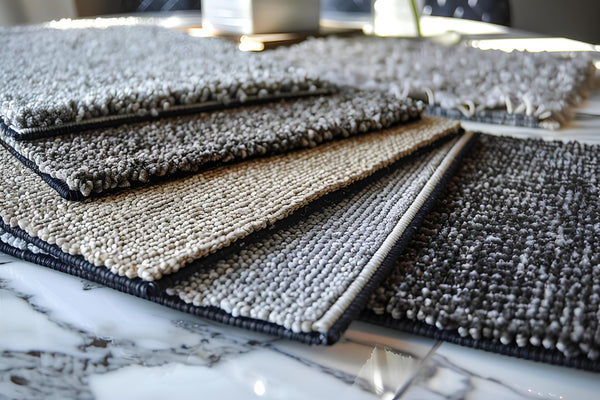
Carpets are likely to generate significant waste. However, French carpet manufacturers are environmentally conscious. Thus, they create eco-designed carpets made from recycled fibers. This waste is then handled by a specialized eco-organization. In addition, these high-performance and resistant carpet tiles can be reused by Orak or recovered.
Case studies and success stories: VALDELIA
VALDELIA is an eco-organization committed to waste management in the building sector, operating within the framework of Extended Producer Responsibility (EPR) for construction and finishing materials.
Its objective is to reduce the environmental impact of waste produced by construction and renovation activities. The eco-organization promotes the reuse, recycling, and responsible disposal of materials.
Since April 2023, VALDELIA has been an engaged partner with Orak for the management of non-reusable tile flows. This collaboration has, for the first time, allowed for centralized collection at a single point, at the gates of Paris. This initiative has optimized
the management and treatment of carpets.
Thus, eco-organizations play an essential role in managing the life cycle of products and waste. In the carpet sector, it is important to ensure the collection, sorting, and recycling of waste. This is the role of VALDELIA, specialized in the collection and recycling of products and waste from the building sector.
With this same desire to preserve the environment, Orak offers you the reuse of carpet tiles. This economic and ecological perspective offers you the possibility of reusing good condition tiles for resale for their reuse.
Also read